IT resilience doesn't mean making everything redundant. It means knowing exactly which systems your business cannot survive without — and building real recovery capability around those, while right-sizing everything else.
Financial firms face an uncomfortable tension: the cost of over-engineering resilience is high, but the cost of under-engineering it can be catastrophic. A single trading platform outage at the wrong moment can result in missed regulatory deadlines, client losses, and reputational damage that takes years to repair.
The firms that navigate this well aren't spending more than their peers. They're spending more strategically. The difference is a formal criticality framework that drives every BC/DR investment decision.
The Foundation: Tiered Criticality Classification
Not all systems deserve the same level of resilience investment. The first step in building a cost-effective BC/DR program is classifying every system into tiers based on how quickly the business needs it back online and how much data loss is acceptable if something goes wrong.
| Tier | Description | Recovery Time Target | Examples |
|---|---|---|---|
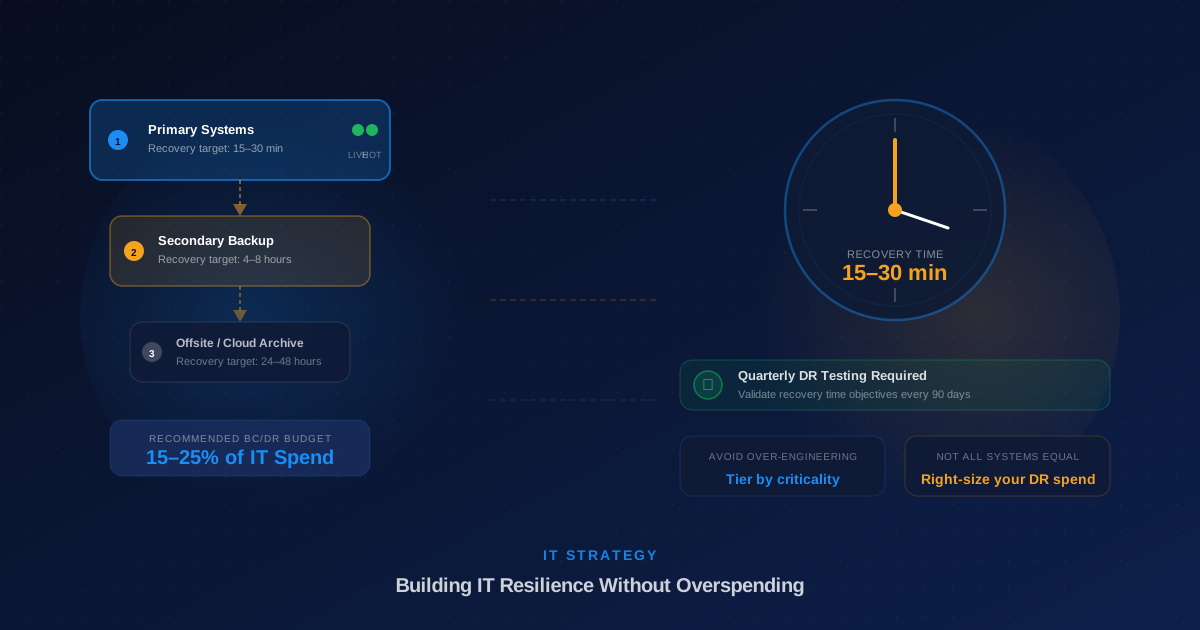
| Tier 1 | Mission-critical — failure stops core operations | 15–30 minutes | Trading platforms, portfolio systems, client data environments |
| Tier 2 | Business-important — significant impact if unavailable >4 hours | 4–8 hours | CRM, email, internal communications, reporting tools |
| Tier 3 | Operational — meaningful but not immediately crippling | 24–48 hours | HR systems, non-critical internal tools, archive storage |
The recovery time targets above are starting points — your firm's specific RTO and RPO requirements for each system should be defined by business leadership, not IT. The IT team's job is to deliver those targets within budget, using the right combination of replication, backup, and failover technology.
Where Most Financial Firms Overspend
The most common BC/DR mistake is treating every system like a Tier 1 system. It's tempting — anything feels mission-critical when you're the person responsible for it. But when everything is Tier 1, the budget collapses under its own weight, and the firm ends up with a program that's expensive to maintain but inadequately tested because there's too much of it to exercise regularly.
A firm that spends aggressively on hot-standby replication for every system — including HR software and internal wikis — is likely overspending by 40–60% compared to a firm with a well-designed tiered architecture. That excess spend crowds out investment in the one thing that matters most: regularly testing whether the Tier 1 recovery actually works.
What Tier 1 Resilience Actually Requires
For systems with a 15–30 minute recovery target, you need near-real-time replication to a geographically separate environment, automated failover capability (or near-automated with minimal manual steps), and documented runbooks that have been practiced by the team that would execute them. This is expensive to do right — which is exactly why you should only do it for the systems that truly require it.
Right-Sizing Tier 2 and Tier 3
Tier 2 systems can typically be served by a combination of cloud backup with a 4-hour restore SLA, vendor-hosted redundancy (most SaaS platforms include this), and documented manual workarounds for the interim period. Tier 3 systems often need nothing more than daily offsite backups and a clear restore procedure. The key is documenting these explicitly rather than leaving the recovery approach undefined.
The Testing Problem
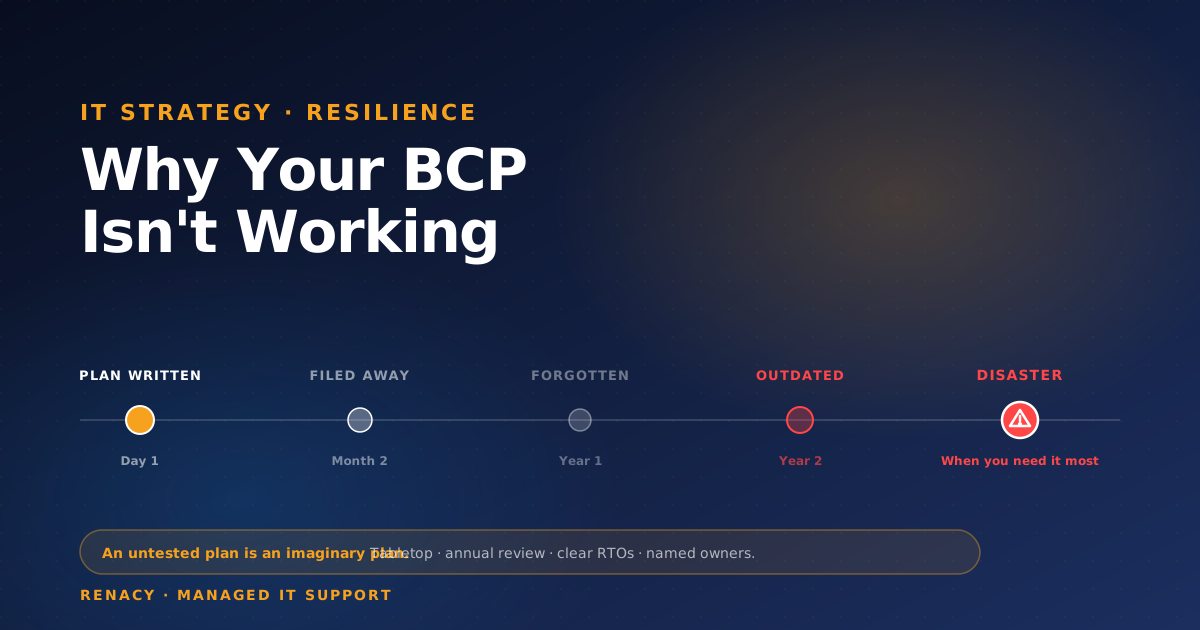
A BC/DR plan that has never been tested is a false sense of security. The financial industry has significant evidence of this: organizations that believed their backups were functioning discovered at the worst possible moment that the backups had been silently failing for months, or that the restore process would take three times longer than planned.
Industry guidance has moved toward quarterly testing for Tier 1 systems and at minimum annual full-scenario exercises for the broader DR plan. The goal is to find gaps under controlled conditions — not during an actual incident. Most organizations discover significant issues in their first meaningful test, which is exactly why you want to find them in a drill.
Testing doesn't mean taking production systems offline. For Tier 1 systems, tabletop exercises walk through the recovery steps without actually executing failover. Periodic actual failover tests — ideally during a low-risk maintenance window — confirm that the runbooks work in practice and identify gaps in the documentation or the team's familiarity with the process.
Budgeting for Resilience: The 15–25% Benchmark
Financial services firms typically allocate 15–25% of their total IT budget to business continuity and disaster recovery. The wide range reflects different risk profiles and regulatory requirements — a broker-dealer with real-time regulatory reporting obligations sits at the high end; a wealth management firm with less time-sensitive systems might land at the lower end.
What this number should not do is drive uniform spending across all systems. A firm spending 20% of its IT budget on BC/DR should have a clear allocation breakdown: the majority going to Tier 1 infrastructure, a meaningful portion to Tier 2, and a relatively small amount to Tier 3. If the distribution is roughly even, that's a signal that the criticality framework isn't being used to drive investment decisions.
Working With a Managed IT Partner on BC/DR
For many financial firms without dedicated infrastructure teams, the practical challenge of BC/DR is implementation and maintenance — not strategy. It's relatively straightforward to design a tiered resilience architecture on paper. The hard part is configuring it correctly, keeping it current as the environment changes, and actually running the tests on schedule.
A managed IT provider with BC/DR experience can own the operational execution: maintaining the backup environment, running quarterly restore tests, producing the documentation your compliance team needs, and escalating when something in the backup chain stops working before it becomes a real problem.
Frequently Asked Questions
Related reading: The Hidden IT Costs That Silently Drain Mid-Sized Company Budgets →

Renacy is a managed IT support provider serving businesses across New York, New Jersey, Pennsylvania, Connecticut, Massachusetts, Maryland, and Washington DC. Our team specializes in proactive device monitoring, helpdesk support, cloud backup & disaster recovery, and network infrastructure management. Learn more about Renacy →