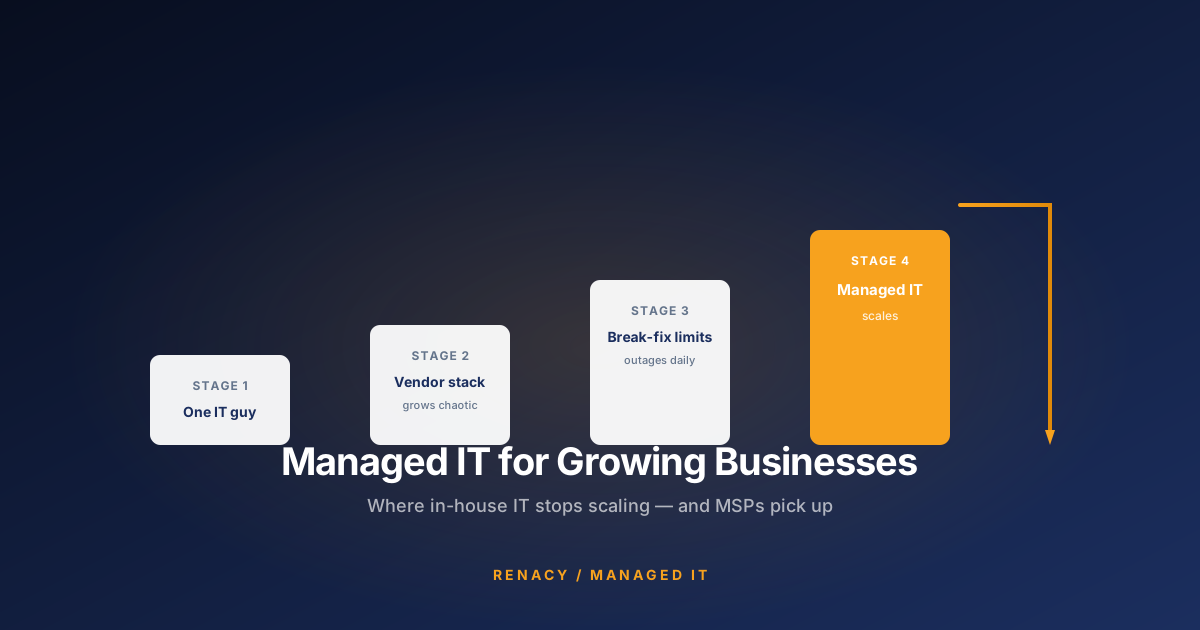
Every business starts with break-fix IT — call someone when something breaks, pay the bill, move on. It's simple, low-commitment, and perfectly adequate when your technology footprint is small. The problem is that most businesses outgrow it without realizing it until the damage is already done.
Break-fix works on a fundamental assumption: IT problems are occasional, isolated, and manageable with a quick service call. The moment that assumption stops being true — when your business has grown complex enough that IT issues are frequent, interconnected, and consequential — the model becomes a liability rather than a convenience.
The question isn't whether break-fix is bad. It's whether it's right for where your business is today. Here's how to tell when you've crossed the line.
The Six Signs You've Outgrown Break-Fix Support
You're calling IT more than twice a month
Frequent service calls signal recurring issues that a reactive model never fully resolves — just temporarily patches.
The same problems keep coming back
Break-fix fixes symptoms, not root causes. If your systems are having the same failures repeatedly, no one is looking at why.
Downtime is costing more than the IT bill
When an hour of downtime costs more in lost productivity than your monthly IT spend, reactive support is economically irrational.
You can't plan technology investments
If your IT budget is driven by whatever breaks next, you have no ability to make strategic technology decisions ahead of the need.
Security patches are falling behind
Break-fix providers don't proactively manage patching. If your systems are running outdated software, you have unmanaged security exposure.
Employees are losing faith in IT
When staff work around IT problems rather than reporting them, it's a cultural signal that technology has become an obstacle rather than an enabler.
Why the True Cost of Break-Fix Is Always Higher Than It Looks
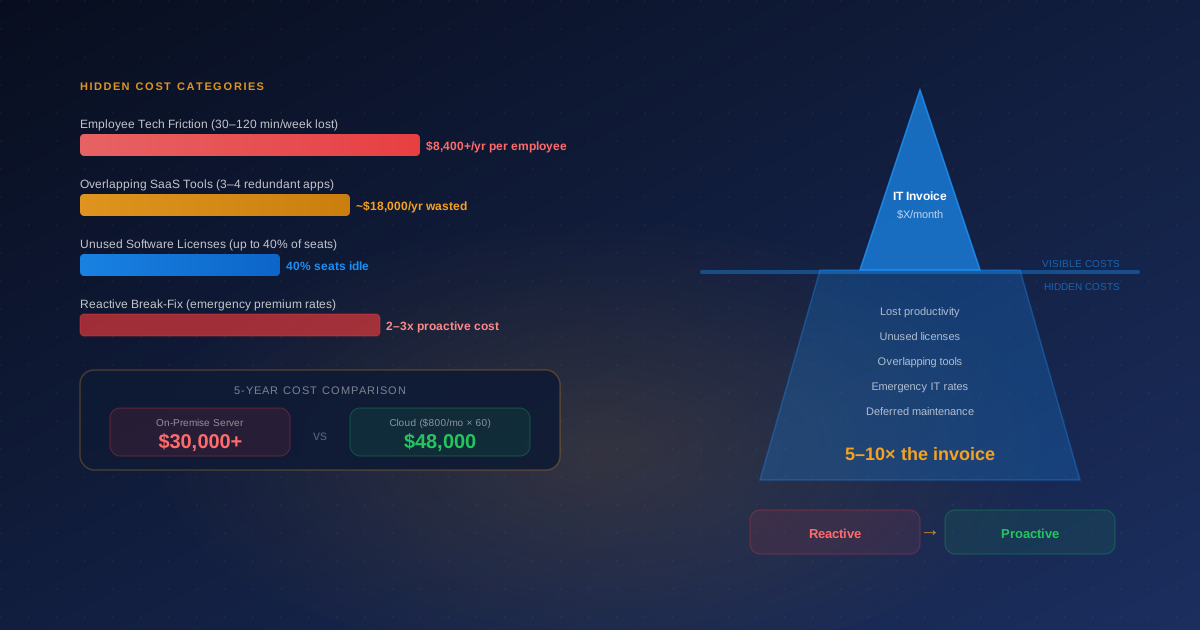
The invoice from your break-fix IT provider is the smallest part of what you're actually paying. The real cost of reactive IT includes lost employee productivity while systems are down, the time managers spend dealing with IT issues instead of their actual jobs, data recovery work after incidents that proper backups would have prevented, and the compounding cost of deferred maintenance that eventually results in larger failures.
If your average employee costs $60/hour in fully-loaded labor and a server outage affects 20 people for 4 hours, you've lost $4,800 in productivity — before you pay a single dollar for the service call. A single outage can cost more than several months of managed IT support.
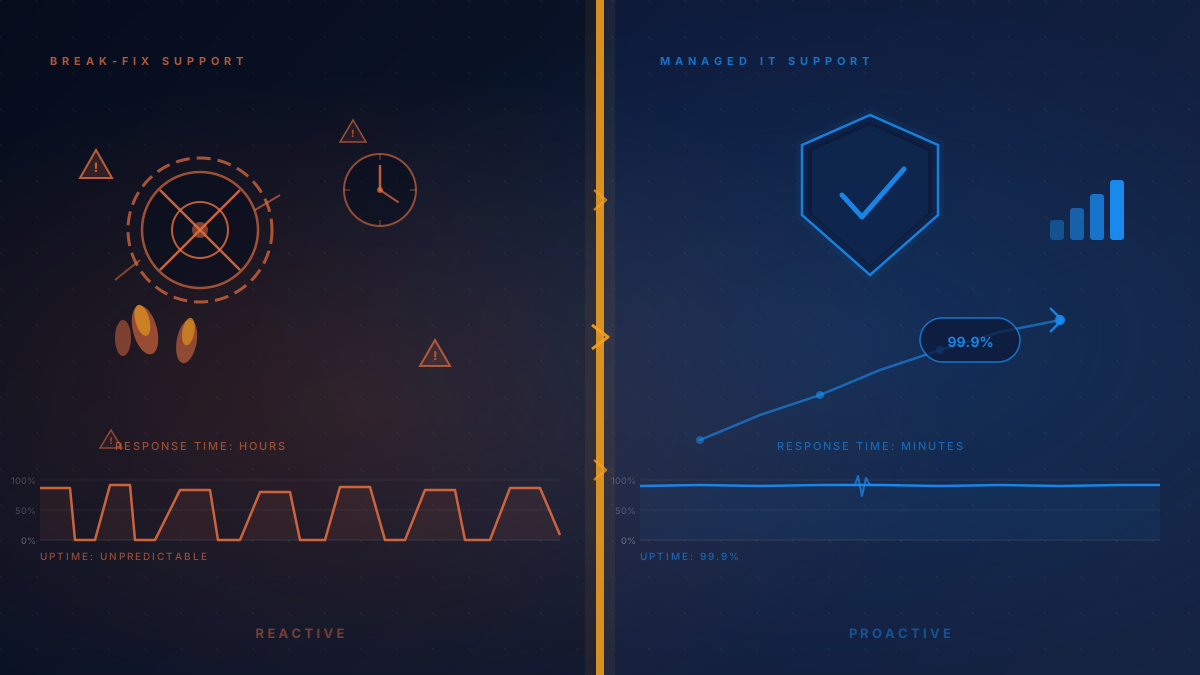
Break-fix providers have no financial incentive to prevent problems — their revenue comes from problems occurring. This isn't a criticism of individual technicians; it's a structural misalignment between what you want (reliable systems) and what generates revenue for your provider (systems that need fixing).
Break-Fix vs. Managed IT: A Direct Comparison
| Factor | Break-Fix | Managed IT |
|---|---|---|
| Cost structure | Unpredictable — pay per incident | Fixed monthly fee, predictable budget |
| Incentive alignment | Revenue from problems occurring | Revenue from preventing problems |
| Patch management | Reactive — after issues surface | Proactive — ongoing and scheduled |
| Security monitoring | None or minimal | Continuous 24/7 monitoring |
| Backup & recovery | Often ad-hoc or unmanaged | Automated with tested restore processes |
| Strategic planning | Not included | Regular technology reviews and roadmapping |
What Industries Feel This Shift Most Acutely
While any growing business can outgrow break-fix support, certain industries reach that inflection point faster because of their specific technology dependencies and risk profiles.
Professional Services (Legal, Accounting, Consulting)
Billable hours are the product. Every hour of system downtime is direct revenue loss. Compliance requirements around client data confidentiality also make ad-hoc security management increasingly risky as these firms grow.
Healthcare-Adjacent Businesses
Any organization handling patient data, insurance information, or health-related records faces HIPAA obligations that reactive IT support cannot reliably maintain. Managed IT with documented controls is effectively a compliance requirement at scale.
Businesses with Multiple Locations or Remote Teams
Break-fix works adequately when all your technology is in one building. Distributed environments — multiple offices, remote workers, cloud applications — require centralized monitoring and management that break-fix models aren't designed to provide.
How the Transition to Managed IT Actually Works
The most common objection to switching from break-fix to managed IT is cost — the monthly fee feels like a new expense compared to only paying when something breaks. This math is usually wrong when you factor in actual break-fix spend and downtime costs, but the perception is understandable.
A well-structured transition doesn't have to be abrupt. It starts with a thorough assessment of your current environment — what you have, what's at risk, and what's generating the most friction. From there, monitoring and management tools are deployed, typically with zero disruption to day-to-day operations. Within the first 60–90 days, most businesses see a meaningful reduction in the frequency of IT incidents as proactive management begins catching issues before they escalate.
Clear SLAs with defined response times. Transparent documentation of what's included. Security expertise matched to your industry's compliance requirements. A team that treats your business goals as their problem to solve — not just your tickets as problems to close.
Frequently Asked Questions
Related reading: Shadow IT: The Security Risk Already Living Inside Your Network →

Renacy is a managed IT support provider serving businesses across New York, New Jersey, Pennsylvania, Connecticut, Massachusetts, Maryland, and Washington DC. Our team specializes in proactive device monitoring, helpdesk support, cloud backup & disaster recovery, and network infrastructure management. Learn more about Renacy →